In recent years Cantonese cuisine has settled into a slow move. The new-generation of chefs is thinner on the ground, expression has become cautious, and the once-productive vitality between tradition and innovation has subdued.
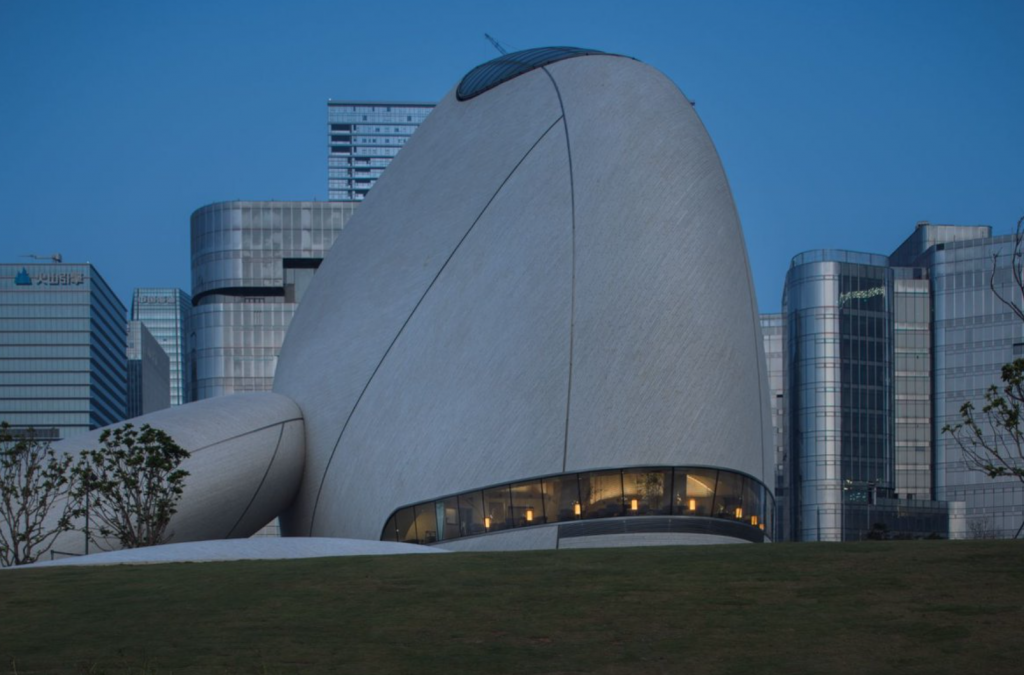
Nestled within the sculptural cloud-capturing stone landscape at Shenzhen Bay Cultural Square, the new opening Xifuliyun Atelier introduces Cantonese cuisine like unpolished jade, taking on a texture that is light, supple and gently warm under the influence of Eastern aesthetics.
Eastern culinary philosophy has long found its balance in clarity, elegance, simplicity and purity. Huainanzi observes that “the greatest flavor is understated,” while Su Shi, in his poetry, writes of “simple joys in human life.” In his vocabulary, lightness is not tasteless, and simple joy is not austerity but a sense of satisfaction.
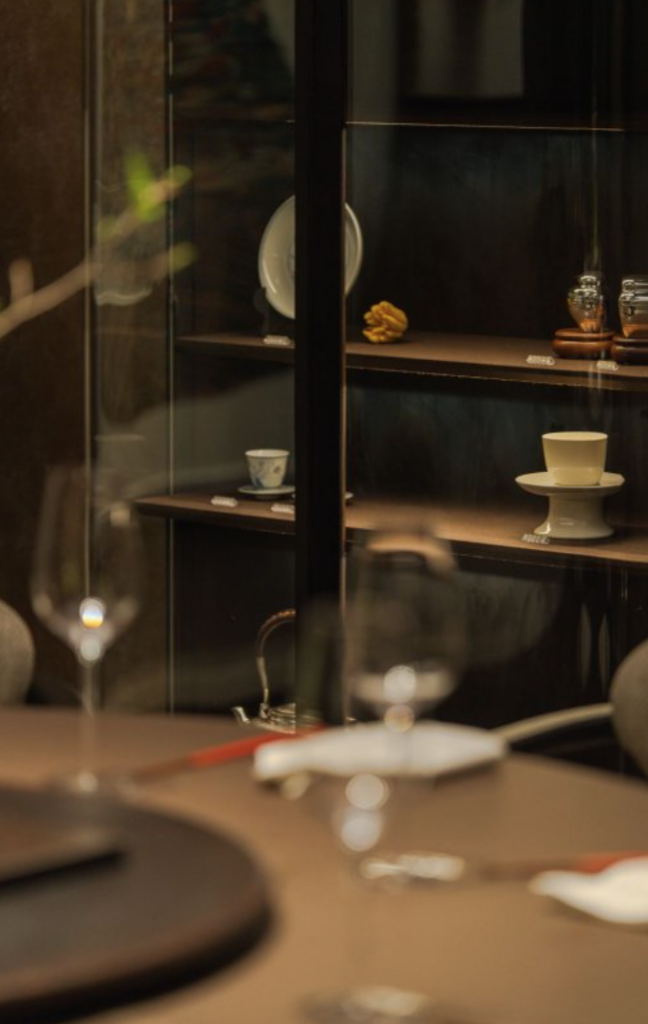
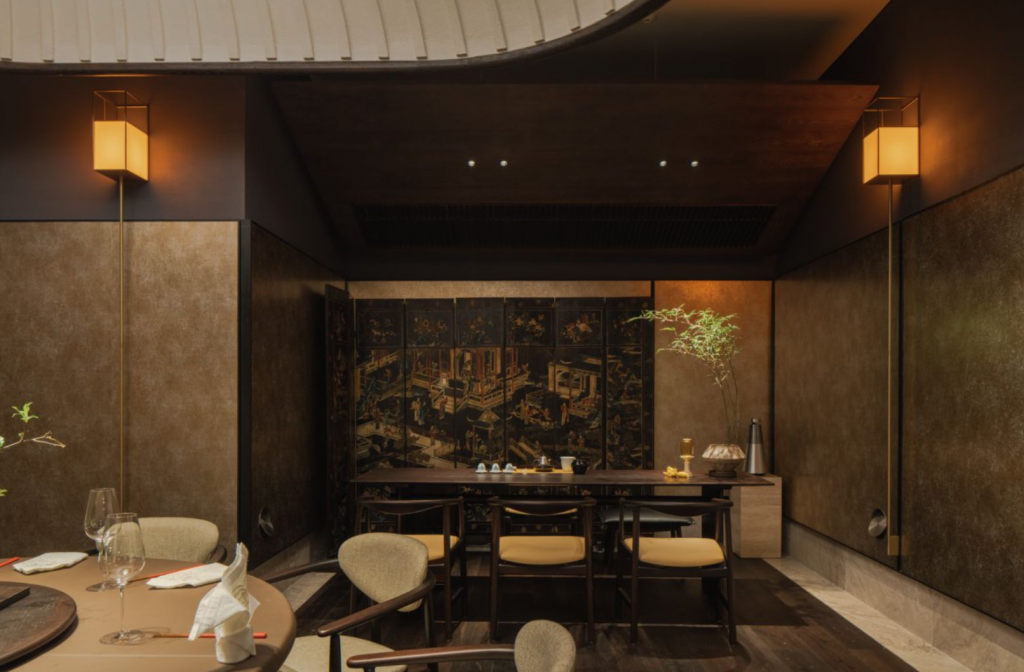
At Xi, Cantonese cuisine is treated as a vessel for Eastern aesthetic thought. Food retains its character, tableware carries an Eastern elegance, and the spatial environment cultivates a contemplative state of mind. Together, they interpret with the seasons, weaving food, form and atmosphere into a single continuum.
At the helm is the young Hong Kong-born chef Ziyi Fan, who approaches Cantonese cuisine through reduction. Under his direction, the terms – lightness, elegance and authenticity – become the guiding principles, shaping a contemporary culinary expression.
In spring, the menu brings together mountains and seas with ingredients sourced across the country, such as the radish from the highlands of Taizhou, water chestnut from Shaoguan’s Beixiang, and tamarillo from Yunnan.
From the southern waters of Thailand come mantis prawns, gently cooked at low temperature in Chinese yellow wine. Their roe turns custard-like at the core, while a delicate veil of wine jelly dissolves on the palate – light, mellow, and softly sweet. A double-boiled seasonal soup of sea duck, abalone, fritillaria and loquat unfolds over five hours. It’s clear yet substantial.
The famed golden grouper of the Greater Bay Area is presented without excess handling. Steamed in the classical Cantonese tradition and finished with a light drizzle of sauce, it allows the fish’s natural richness and texture to speak for themselves. It symbolizes both Cantonese cuisine’s reverence for freshness and a distinctly Eastern sense of minimalism.
By contrast, the fish maw served with green curry is inclusive and eclectic. Its crisp exterior gives way to a yielding interior, while green curry sauce – infused with lemongrass, lime leaf and ginger – introduces brightness that tempers richness without erasing it.
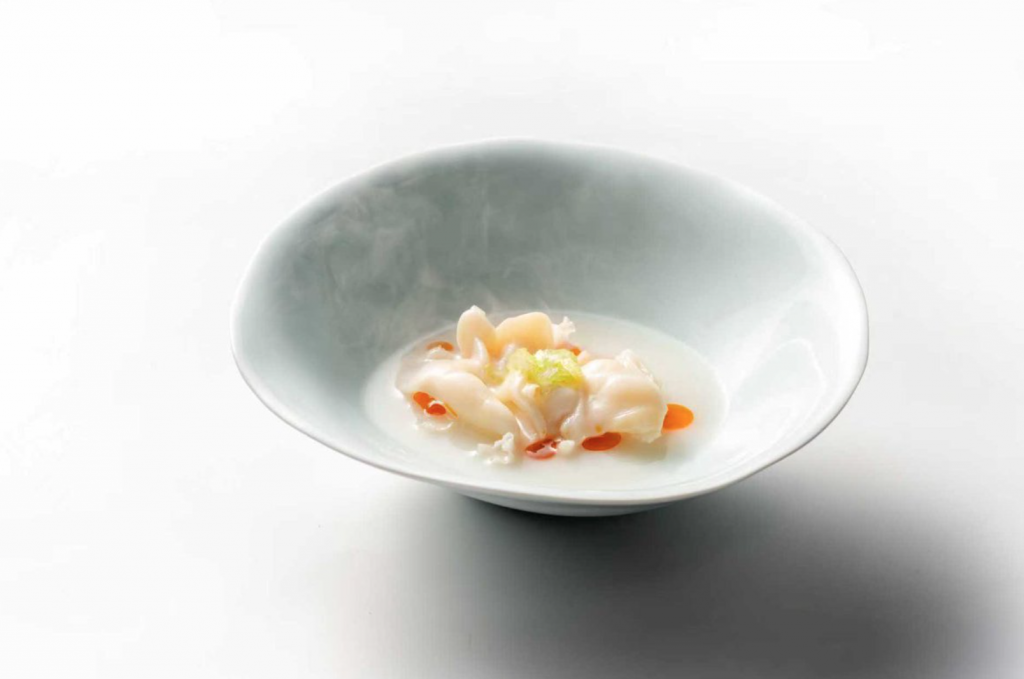
A century-old sour broth is used to poach live sea clams. Built on chicken stock and layered with garlic scapes, white pepper, gourd and fermented citrus acidity, it is restorative and seasonal in character. The clams are cooked table-side within five seconds, preserving a pure, unmediated freshness.
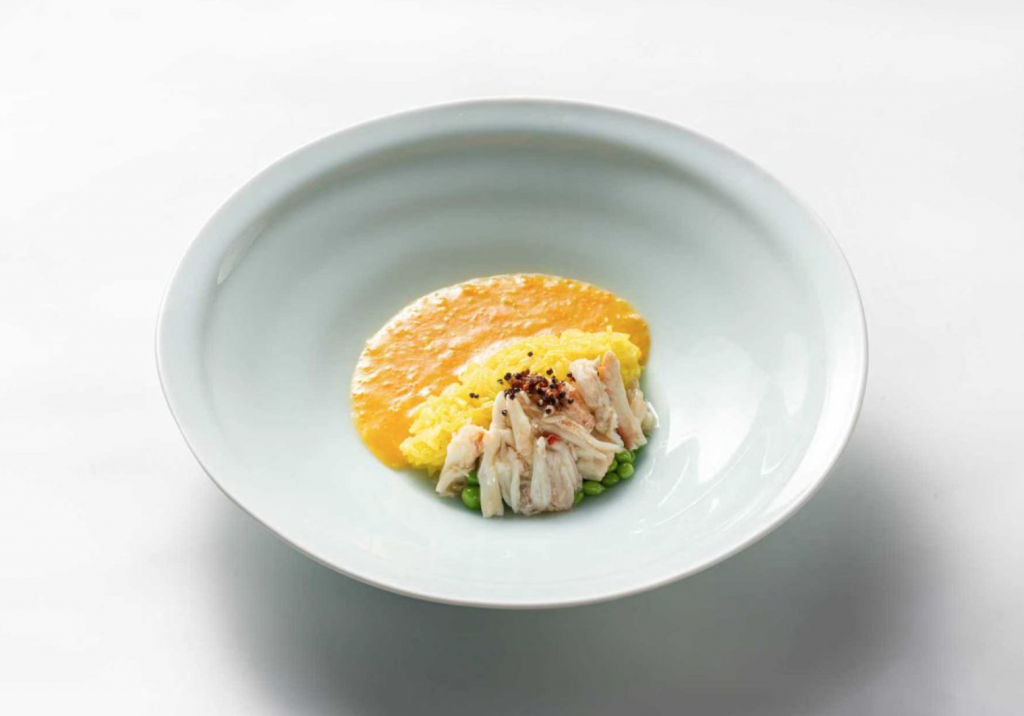
Stuffed swallow’s nest with phoenix wing, served with tamarillo sauce, balances softness and gentle acidity. Crab roe from wild river crabs is extracted in minute quantities, paired with ginger-infused rice, crab meat and beans, producing a taste that feels grounded in landscape rather than technique.
Tea pairing levels up the meal. A 2008 Ban Zhang pu-erh from the core region of Bulang Mountain is slowly decocted over eight hours, producing a dense liquor that stands alongside rich dishes while cleansing the palate. Aged tea from Mansa, also slow-brewed for over eight hours, reveals subtle cocoa notes, served with ginger milk curd and handmade black-grain sachima. Together, they end the meal with warmth.
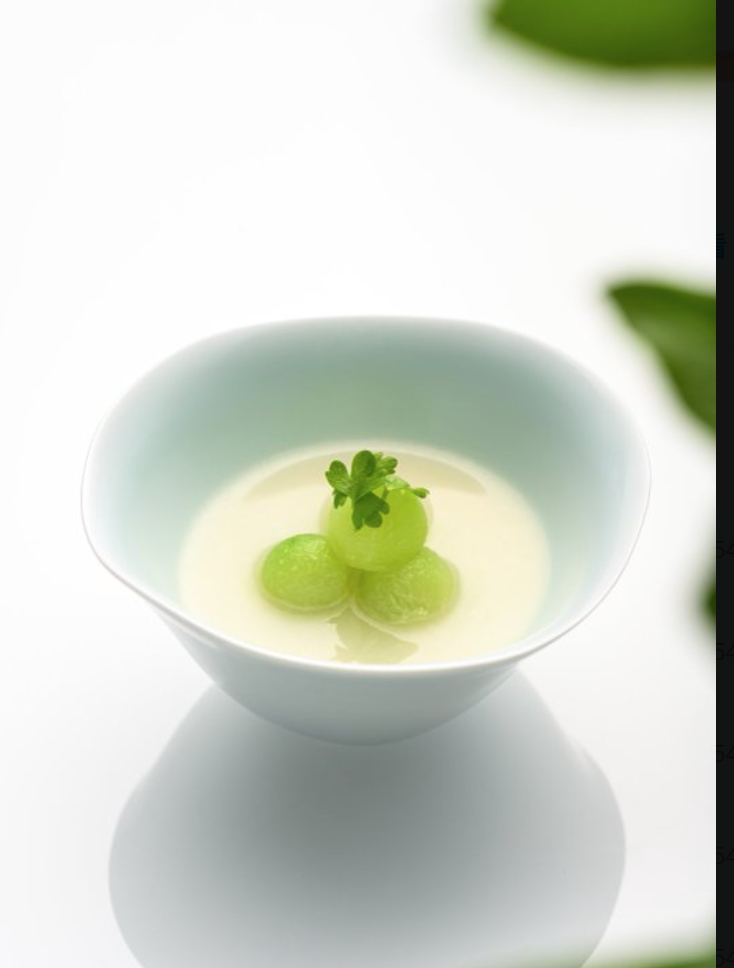
The wisdom of vessels as carriers of the Dao is expressed through hand-crafted tableware products. White porcelain frames delicate fish, pale celadon supports soft soups, and silverware introduces a metallic sheen that subtly anchors the table.
The architecture extends this language outward. Framed by 270-degree views of sea and sky, it becomes an extension of the landscape itself. Curved circulation paths and layered transitions draw on the principles of classical Chinese garden design, where the rock, water, light and planting are composed as atmosphere.
Wind, shadow and time are not backdrop elements – they are part of the composition itself. At Xi, ingredients follow the rhythm of the seasons, cooking is guided by restraint, vessels balance function with form, and space is conceived to hold time. Food, tableware and environment are woven together as overlapping expressions of a single aesthetic sensibility.
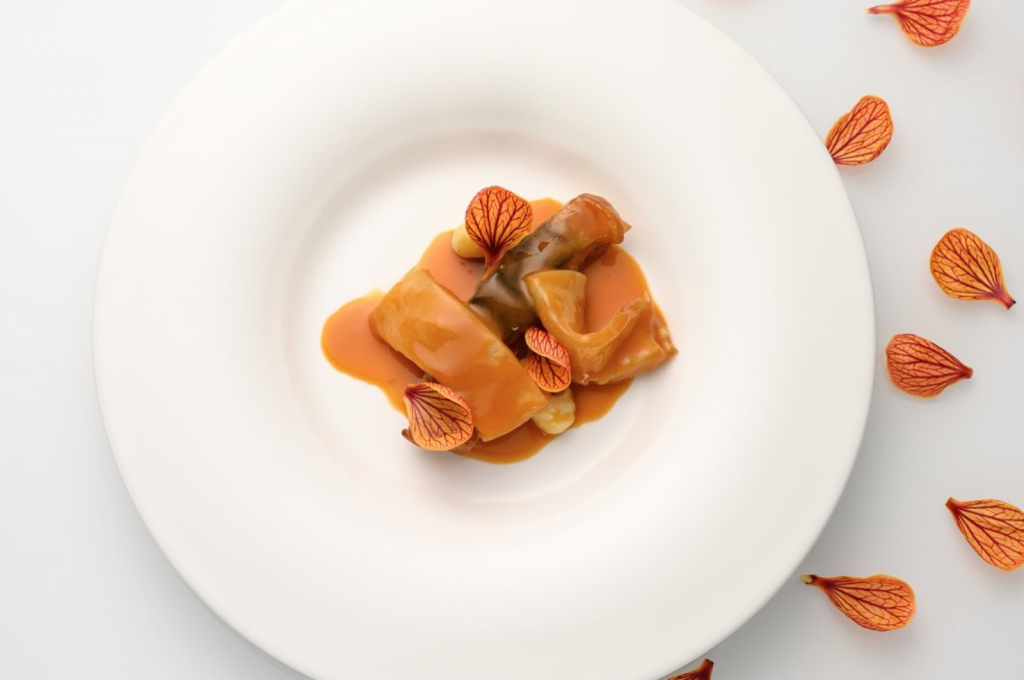
As a newly opened restaurant, the menu is still being refined. The young Chef Fan shows a potential, with a practice that is gradually taking shape and a direction already visible – towards a more mature expression that blends Cantonese cuisine with an Eastern beauty.